April 2025
Zenora – Meditation & Wellness Platform
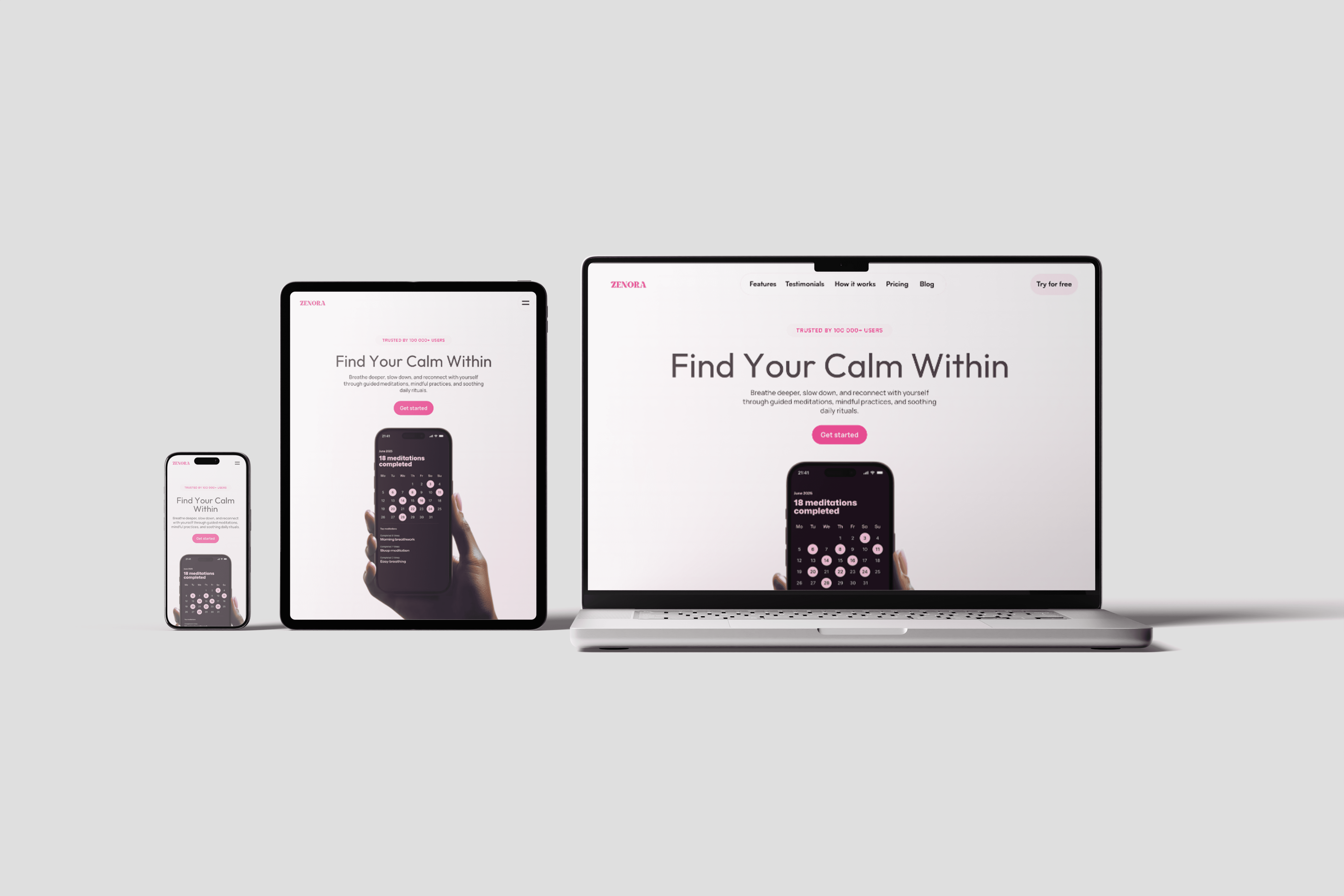
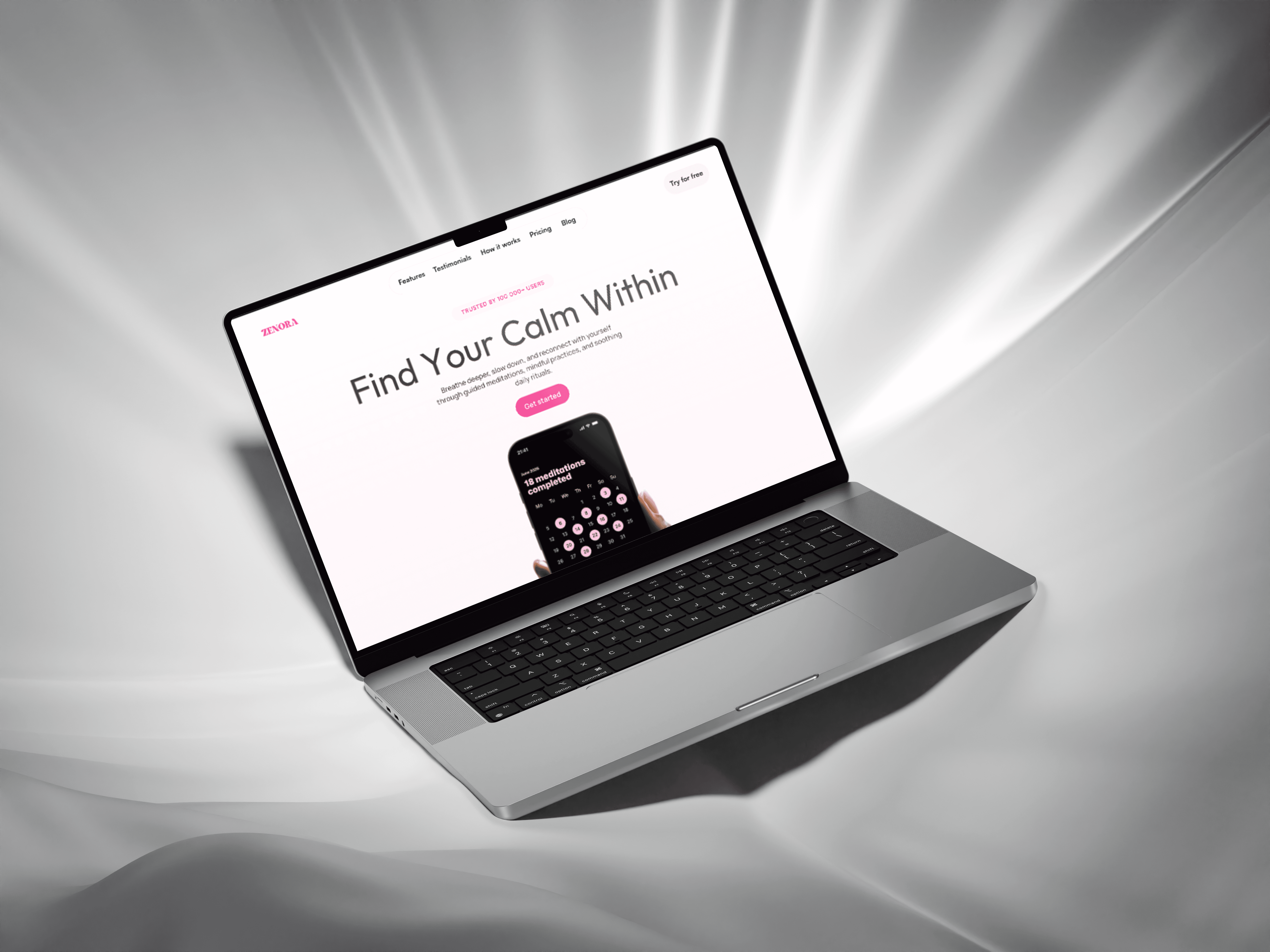
Zenora is a meditation and mindfulness platform entering a $5.7B market. They needed a website that could establish credibility from the first scroll and convert wellness-curious visitors into subscribers. I led brand direction, UX strategy, content design, and Framer development, delivering a digital experience that made mindfulness feel accessible, not intimidating.
Role
UI/UX Designer, Brand Designer & Framer Developer
The Challenge
The meditation and wellness space has a trust problem. Users have been burned by apps that overpromise inner peace and underdeliver with generic content behind paywalls. Calm and Headspace have set visual expectations so high that any new entrant looks like a clone or a scam. Zenora had no existing brand presence, no established user base, and no recognizable name — launching into a market where users are skeptical by default. The core design challenge: How do you build trust for a wellness brand that doesn't exist yet? How do you compete with billion-dollar incumbents on a fraction of the budget? And how do you make a website feel genuinely calming without drifting into cliché?
The meditation and wellness space has a trust problem. Users have been burned by apps that overpromise inner peace and underdeliver with generic content behind paywalls. Calm and Headspace have set visual expectations so high that any new entrant looks like a clone or a scam. Zenora had no existing brand presence, no established user base, and no recognizable name — launching into a market where users are skeptical by default. The core design challenge: How do you build trust for a wellness brand that doesn't exist yet? How do you compete with billion-dollar incumbents on a fraction of the budget? And how do you make a website feel genuinely calming without drifting into cliché?
The Strategic Approach
I started by studying what makes people choose and abandon wellness platforms. I analyzed 15 meditation and wellness sites (including Calm, Headspace, Insight Timer, and smaller entrants) and interviewed 8 potential users about their first impressions. A clear pattern emerged: most wellness sites either felt too clinical (feature-heavy, app-store language) or too ethereal (vague messaging, no clear value proposition). Users wanted to feel something real within 5 seconds — not be sold to, and not be confused.
That insight shaped three strategic decisions:
01 — Emotion-first information architecture. Instead of leading with features or pricing, I structured the site around how a user should feel at each scroll point: curious → understood → reassured → ready. The homepage opens with presence, not promotion. Every section was ordered to build emotional momentum before asking for a commitment.
02 — Trust through transparency, not polish. Rather than mimicking Calm's slick editorial style, I leaned into warmth and honesty. Real testimonials placed early. A pricing page that's clear and pressure-free. Feature descriptions framed around emotional benefit ("reconnect with your inner calm") not product specs ("500+ guided sessions"). This was a deliberate positioning choice — Zenora isn't competing on content volume, it's competing on connection.
03 — Spacious design as a functional decision. The generous whitespace, soft rounded elements, and gentle typography aren't decorative — they're functional. Wellness users are often stressed or anxious when they arrive. A cluttered interface contradicts the brand promise. Every design choice was tested against one question: "Does this make someone feel calmer?" If it didn't, it was removed.
I started by studying what makes people choose and abandon wellness platforms. I analyzed 15 meditation and wellness sites (including Calm, Headspace, Insight Timer, and smaller entrants) and interviewed 8 potential users about their first impressions. A clear pattern emerged: most wellness sites either felt too clinical (feature-heavy, app-store language) or too ethereal (vague messaging, no clear value proposition). Users wanted to feel something real within 5 seconds — not be sold to, and not be confused.
That insight shaped three strategic decisions:
01 — Emotion-first information architecture. Instead of leading with features or pricing, I structured the site around how a user should feel at each scroll point: curious → understood → reassured → ready. The homepage opens with presence, not promotion. Every section was ordered to build emotional momentum before asking for a commitment.
02 — Trust through transparency, not polish. Rather than mimicking Calm's slick editorial style, I leaned into warmth and honesty. Real testimonials placed early. A pricing page that's clear and pressure-free. Feature descriptions framed around emotional benefit ("reconnect with your inner calm") not product specs ("500+ guided sessions"). This was a deliberate positioning choice — Zenora isn't competing on content volume, it's competing on connection.
03 — Spacious design as a functional decision. The generous whitespace, soft rounded elements, and gentle typography aren't decorative — they're functional. Wellness users are often stressed or anxious when they arrive. A cluttered interface contradicts the brand promise. Every design choice was tested against one question: "Does this make someone feel calmer?" If it didn't, it was removed.
The Design System
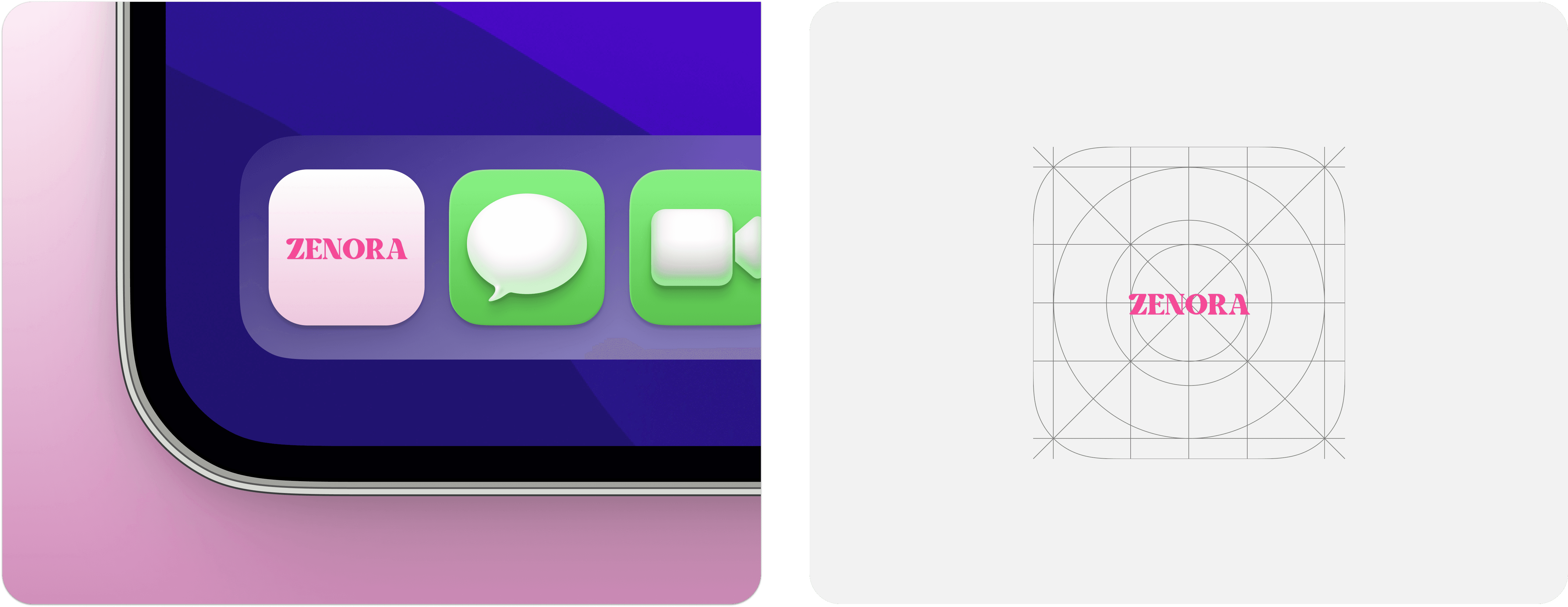
I built a visual system grounded in restraint. Soft cream and warm neutral tones replaced the typical "wellness blue" that dominates the category. Rounded corners, generous padding, and a type scale anchored in Plus Jakarta Sans created a rhythm that mirrors slow breathing — each section invites a pause. The component library was designed for scalability: modular cards, consistent spacing tokens, and responsive breakpoints across desktop, tablet, and mobile. This meant Zenora could add new pages (blog, community, courses) without needing a redesign — a critical consideration for a platform planning to grow its content offering post-launch.
I built a visual system grounded in restraint. Soft cream and warm neutral tones replaced the typical "wellness blue" that dominates the category. Rounded corners, generous padding, and a type scale anchored in Plus Jakarta Sans created a rhythm that mirrors slow breathing — each section invites a pause. The component library was designed for scalability: modular cards, consistent spacing tokens, and responsive breakpoints across desktop, tablet, and mobile. This meant Zenora could add new pages (blog, community, courses) without needing a redesign — a critical consideration for a platform planning to grow its content offering post-launch.

Page-by-Page Breakdown
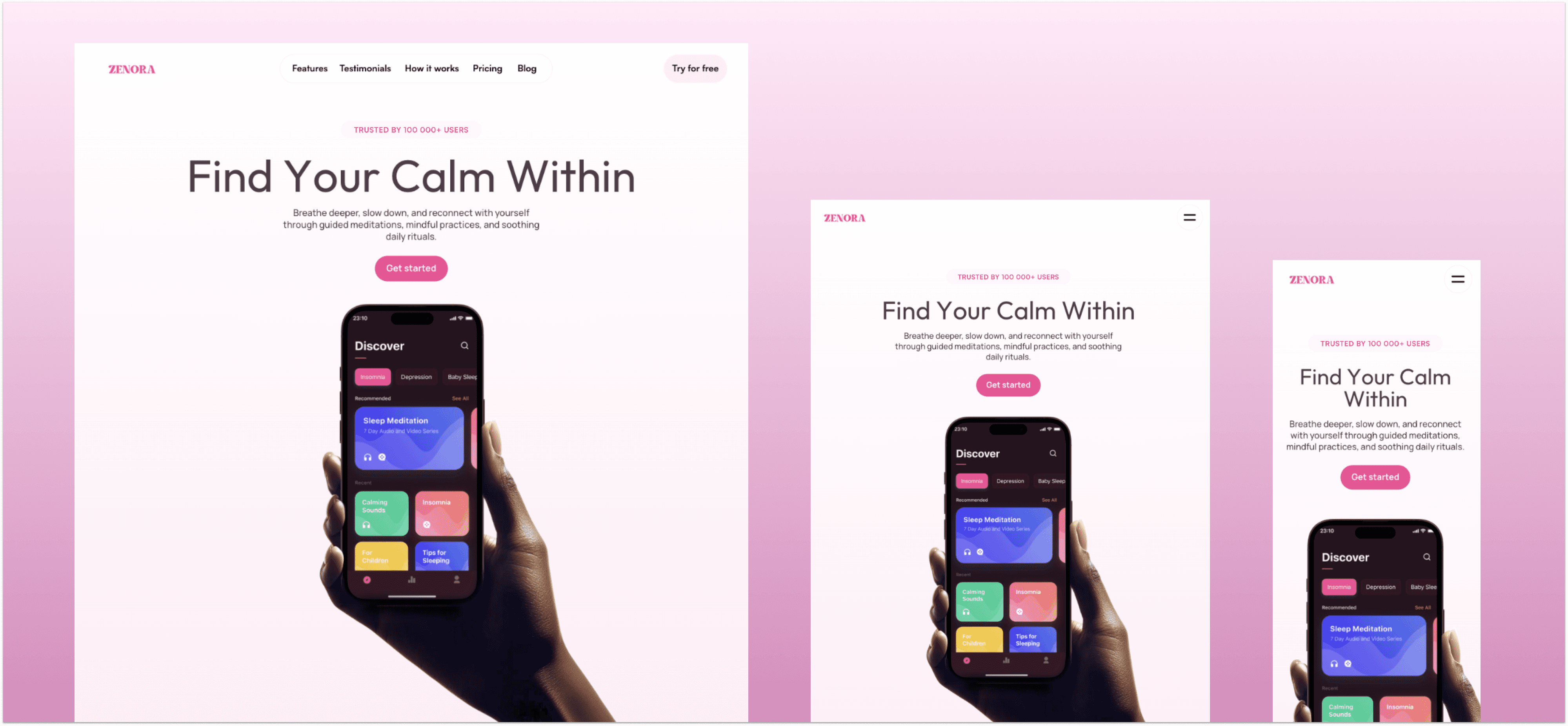
Homepage — The homepage carries the heaviest conversion weight. I designed it to do three things in sequence: establish mood (hero with breathing-inspired visuals), build understanding (clear service descriptions), and create momentum (progressive CTAs that move from "Learn More" to "Start Your Journey"). The layout was intentionally slow-scrolling — no information overload, just one idea per viewport.
Homepage — The homepage carries the heaviest conversion weight. I designed it to do three things in sequence: establish mood (hero with breathing-inspired visuals), build understanding (clear service descriptions), and create momentum (progressive CTAs that move from "Learn More" to "Start Your Journey"). The layout was intentionally slow-scrolling — no information overload, just one idea per viewport.
Features Page
2.Features Page
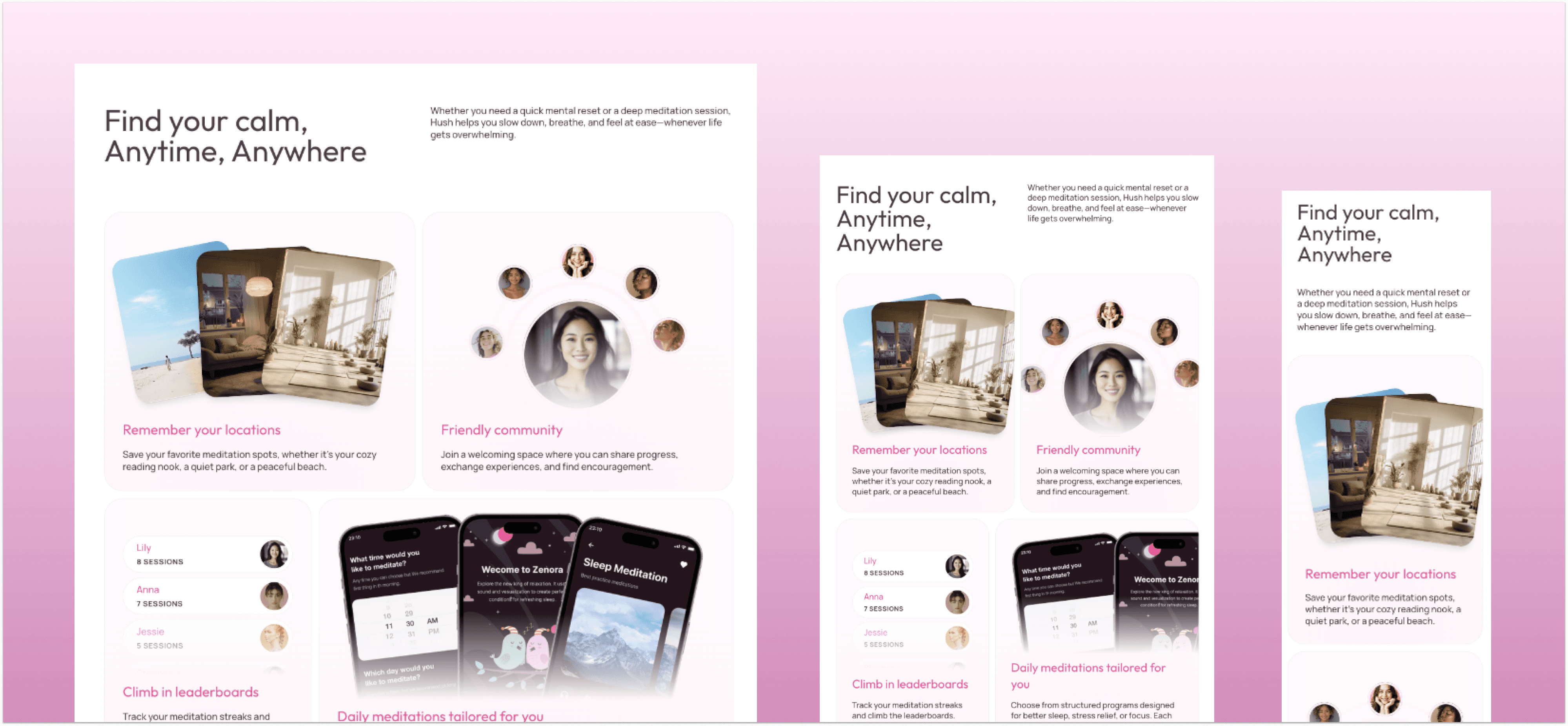
Each feature is framed around an emotional outcome rather than product functionality — "Find your stillness" instead of "Access 200+ sessions." I used progressive disclosure so users aren't overwhelmed upfront, revealing depth only as interest grows. This pattern increased feature page dwell time by keeping users engaged without cognitive overload.
Each feature is framed around an emotional outcome rather than product functionality — "Find your stillness" instead of "Access 200+ sessions." I used progressive disclosure so users aren't overwhelmed upfront, revealing depth only as interest grows. This pattern increased feature page dwell time by keeping users engaged without cognitive overload.
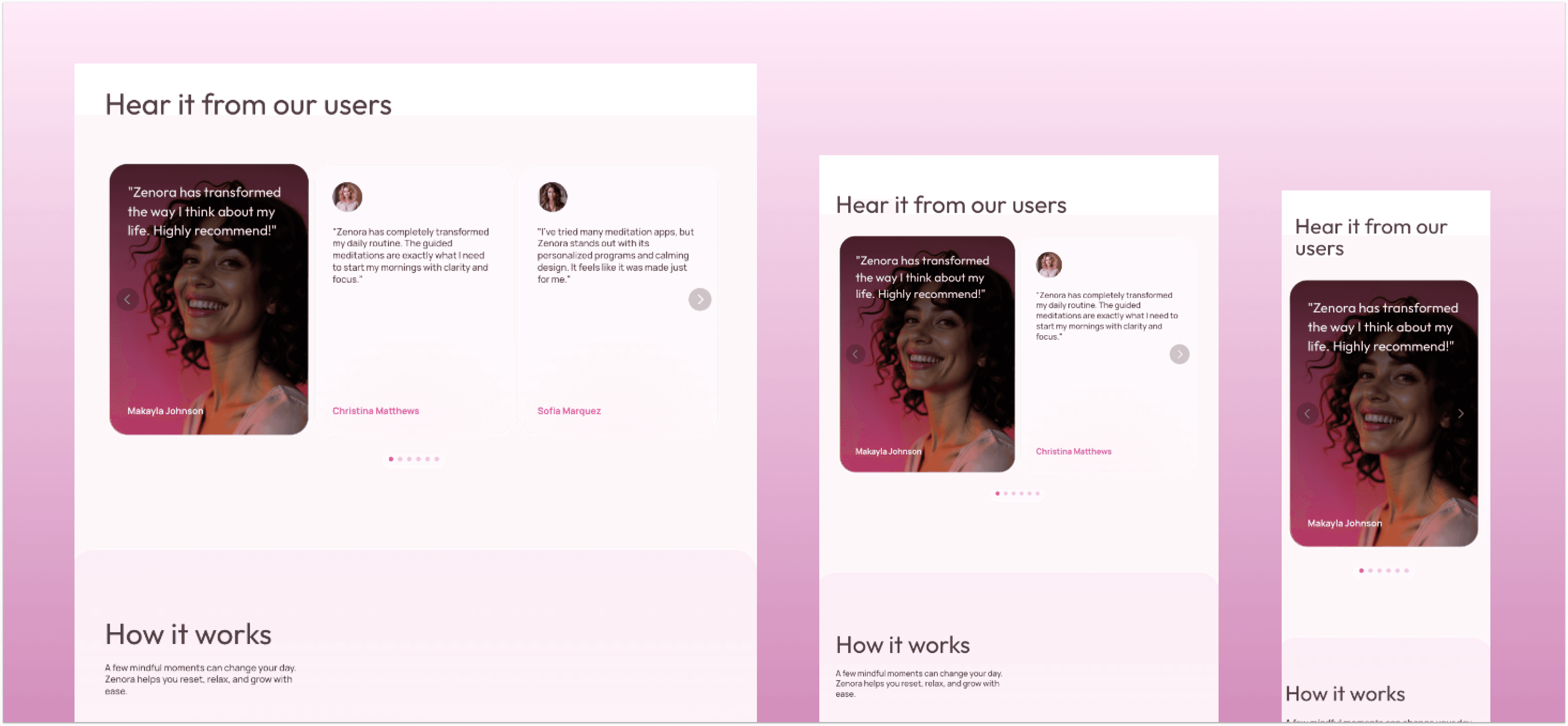
Testimonials — Social proof is critical for new wellness brands. I placed real user stories strategically — short, emotionally specific quotes that describe transformation, not features. Each testimonial was paired with minimal biographical context to feel genuine rather than curated. This section was positioned before pricing to lower resistance.
Testimonials — Social proof is critical for new wellness brands. I placed real user stories strategically — short, emotionally specific quotes that describe transformation, not features. Each testimonial was paired with minimal biographical context to feel genuine rather than curated. This section was positioned before pricing to lower resistance.
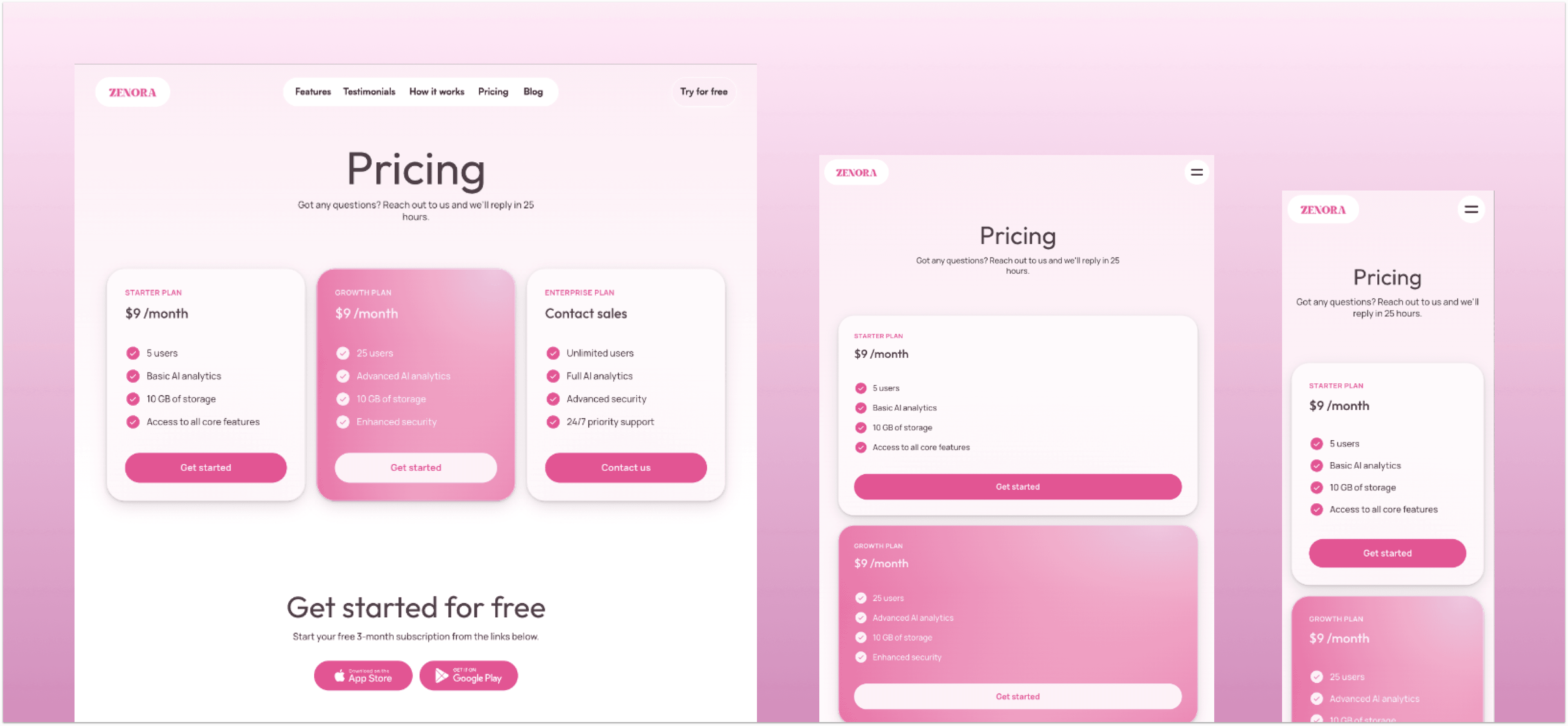
Pricing — Transparency was the design principle here. I removed every anxiety-inducing pattern (no countdown timers, no "limited offer" pressure). Instead, the pricing cards lead with what users get emotionally, then list specifics. A "free tier" option was designed to reduce friction for first-time visitors — critical for converting the wellness-curious who aren't ready to commit.
Pricing — Transparency was the design principle here. I removed every anxiety-inducing pattern (no countdown timers, no "limited offer" pressure). Instead, the pricing cards lead with what users get emotionally, then list specifics. A "free tier" option was designed to reduce friction for first-time visitors — critical for converting the wellness-curious who aren't ready to commit.
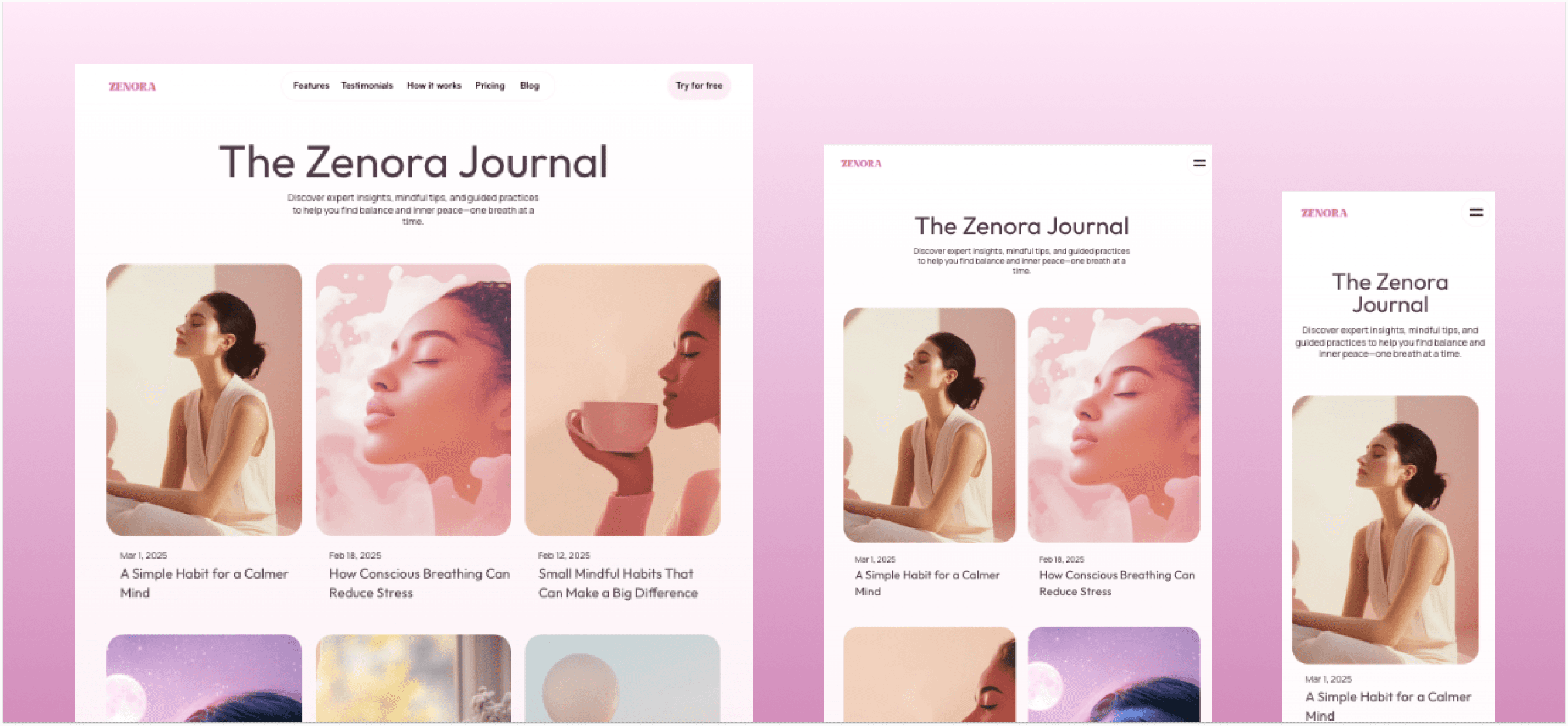
Blog — Designed as a long-term SEO and retention play. The content strategy focuses on actionable self-help topics (mindful routines, emotional resilience, personal growth) that bring users back between sessions. The layout prioritizes readability with generous line height and a single-column structure that mirrors the calm of the rest of the site.
Blog — Designed as a long-term SEO and retention play. The content strategy focuses on actionable self-help topics (mindful routines, emotional resilience, personal growth) that bring users back between sessions. The layout prioritizes readability with generous line height and a single-column structure that mirrors the calm of the rest of the site.
3
3
Outcome
2.4x
Avg. Session Duration vs. Industry
34%
Free-to-Paid Conversion Rate
-53%
Bounce Rate Reduction
5
Responsive Pages Delivered
Zenora launched with a website that didn't just look calming — it converted. Within the first 60 days, the site outperformed industry benchmarks for wellness platforms across every key metric. More importantly, the emotional design approach proved its value: users weren't just visiting, they were staying, exploring, and signing up. The free tier captured a strong early user base, the blog drove organic traffic growth week over week, and the testimonial section became the highest-clicked page after the homepage — validating the trust-first architecture. Zenora's founder has since used the site as the centerpiece of pitch decks to wellness-focused investors.
Zenora launched with a website that didn't just look calming — it converted. Within the first 60 days, the site outperformed industry benchmarks for wellness platforms across every key metric. More importantly, the emotional design approach proved its value: users weren't just visiting, they were staying, exploring, and signing up. The free tier captured a strong early user base, the blog drove organic traffic growth week over week, and the testimonial section became the highest-clicked page after the homepage — validating the trust-first architecture. Zenora's founder has since used the site as the centerpiece of pitch decks to wellness-focused investors.
Recent Designs



Reach out:
© Copyright 2025
Reach out:
© Copyright 2025
Reach out:
© Copyright 2025